
Fay Presto is a scuba diver.
This may come as a surprise to many readers (should they exist) as it’s common knowledge that Fay Presto is a magician, but whereas most magicians work some shitty 9 to 5 to earn the money to buy magic tricks which they perform on the weekends, Fay Presto performs magic around the world to earn money for her scuba diving trips.
She told me once about the odd economics of scuba gear, that almost every piece of scuba equipment from tanks to masks to wetsuits is far cheaper on the internet, but no experienced scuba diver would ever buy things that way. Not because the online products are lower quality or difficult to judge sizes and compatibility or anything like that, but because the one thing you can’t do online is fill up your air tanks.
On a suba diving holiday everyone’s airtanks get re-filled a few times a day, and the only place to do that is at a physical scuba gear suppliers.
However, here’s the rub: there is no money in filling air tanks. If people don’t buy their scuba gear from the physical scuba store where thry dive, the scuba store goes bust, no one can fill up their air tanks, and scuba just kinda… Ends.
In 2015 I went on a mad roadtrip with my wife, the primary intent of which was just to see a lot of the UK but to give it structure I wrapped the concept around a goal: Visit every brick and mortar magic shop in the UK.
When I told people I was doing this I was inundated with requests for me to record the trip somehow, to let people see all these things so armed with a laptop, two digital cameras and no microphones¹, we set about making a video travelogue of every magic store in the uk.
We managed to put out 11 of the 25ish episodes we got footage for. Technically we could still put those other episodes out but the problem is, its been nearly 10 years and in the time it took us to put out the first 11 videos, two of the shops we had visited in that first run were already closed down. One moved 100% online (World Magic Shop) and they were happy for us put their episode out. Another burned down in a bizarre flash paper and 3D printing incident, and we decided that putting out a video of the now grieving² owner bragging about being a big supplier of flammable materials to magicians was possibly a little insensitive.
Even more have been permanently shuttered or moved 100% online since.
One of the shop videos which we never got around to putting online contacted us several times after we abandoned the project, desperate for us to produce his episode. In hindsight this may have been because he thought he needed the publicity but of the 11 epidodes we did put out, 4 have closed their doors for good and 2 have had to move to less expensive premises.
The numbers are equally bad for the ones we didn’t get around to putting online.
The problem, as I see it, is a simple one:
Magicians never have to come up for air
Did you know that the CEO of videogames comany Gearbox Software, Randy Pitchford, also owns The Magic Castle, Academy for the Magical Arts and Genii magazine?
Though known to the world as a big name in the videogames industry, there’s a lot of evidence that Mr Pitchford truly cares about the magical arts. He is also one of the few videogame CEOs with no section on his wikipedia titled “Controversy”³.
A lot of game studios are kind of like magic shops in a way. They are opened and run by people with a real passion for the art. People who grew up appreciating the greats. Harry Houdini, Peter Molyneux, David Copperfield, Hideo Kojima, Paul Daniels, Yuji Naka, Dai Vernon, Shigeru Miyamoto, Jeff McBride, Jon Carmack. I could list them all day.
More to the point they will continue to work in these industries so long as the business provides enough for them to survive. If it pays the wages and the bills it is worth it.
But thats not how everyone thinks.
Videogame publishers are large corporations with a board of directors and a promise of growth to shareholders. It is not enough for them to make enough money for the wages to be paid and the lights kept on. They have a singular mission to make more profit each year than they did the year before. That way the company receives a higher valuation and the shares held by the shareholders become more valuable, which is the only reason they bought the shares in the first place, because then they can sell them on to someone else at a higher price than they paid and keep the difference⁴.
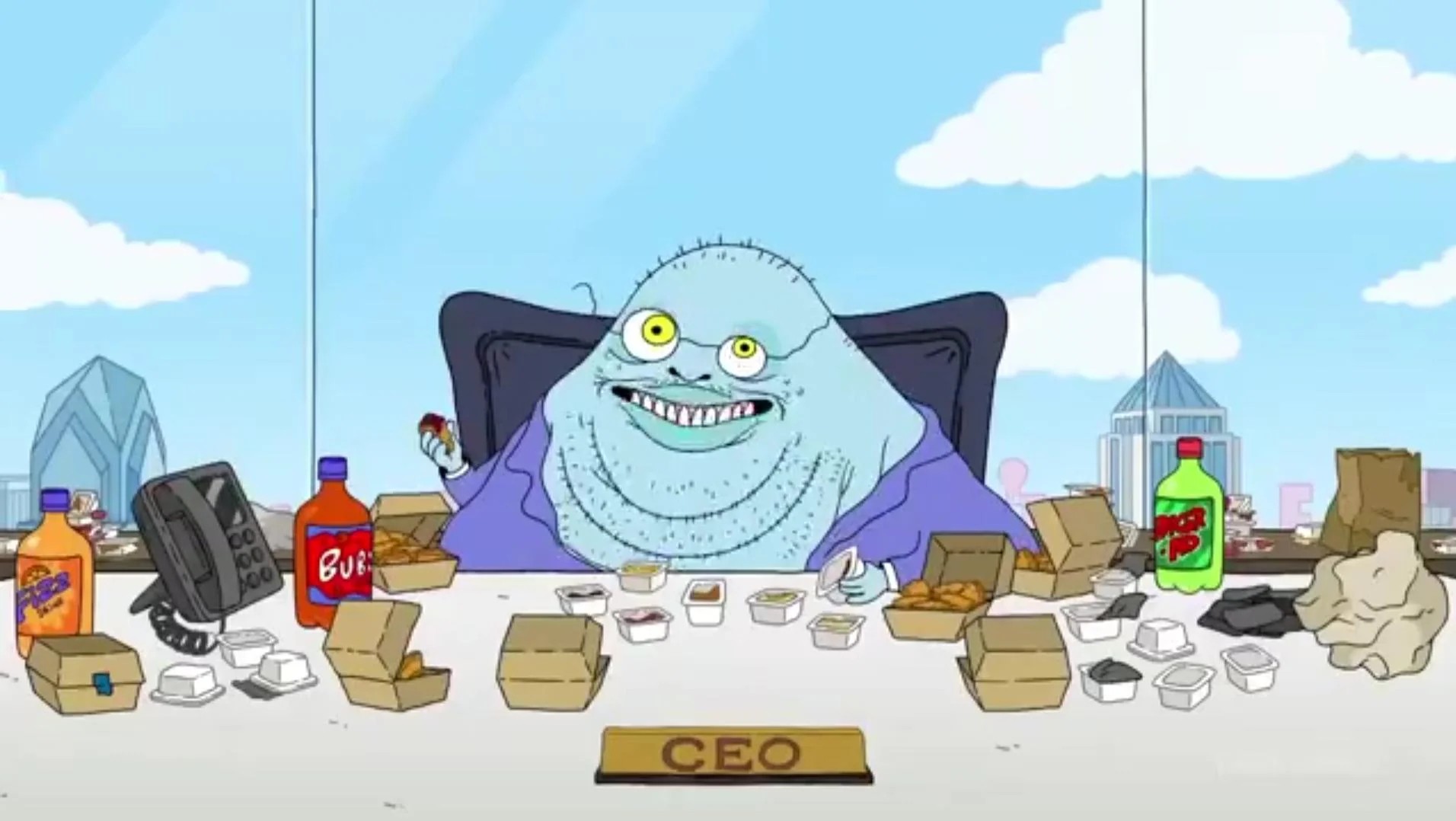
Companies do batshit things to ensure this ever increasing value, including but not limited to:
- Buying competitors and closing them down to expand a monopoly
- Buying smaller unrelated businesses and closing them down to write off debts
- Investing in new products or intellectual properties and then destroying them, using the projected loss as a tax write-off worth more than they expected the product to be worth
Capitalism has long been defended as the most efficient way to motivate the creation of goods, services and culture, as well as fostering competition to improve those things. Somehow though, it seems we have gotten to a point where there is more money in making things worse and destroying businesses outright, all the while wrapping any culture or discovery in intellectual property law and locking it away from anyone who might want or need it.
Randy Pitchford by all accounts bought into magic as a business because he believes in it. But he won’t live forever and sooner or later it will change hands, probably to someone with a publisher mindset, who sees the money made by the Castle, Academy and Magazine and wants those profits. But they will then want those profits to grow. They will initially try to get more business. Then they will upsell and charge more. Then they will cut costs. Eventually the magic castle will be seen as a piece of prime real estate and become a magic themed luxury resort. Then the theme will fade. Genii will be sold on to a publisher who attempts to broaden it’s appeal while paying writers less, ending with it being an advert heavy variety entertainment gossip website packed with nothing but ChatGPT generated advertorials based on press releases by anyone willing to pay for column inches and clicks. The Academy will become the magic equivalent of a stripmall dojo where kids desperate to learn the ancient secrets of the arts pay $40 a week to be taught french drops and double lifts.
But what of the shops?
The move to online magic purchase is firmly cementing itself in the culture and there is insufficient demand for it to ever go back. The shops which have survived have 2 main similarities: they either use the property as a studio to produce new products, giving a secondary reason for a physical location, or they supplement their income by providing a second category of product with broader appeal to passing trade, most commonly fancy dress and joke items like fake dog poo and whoopie cushions.
Much like the tech workers who went fully remote over the pandemic and soon found that they were fired and replaced by much cheaper remote workers in the developing world, online magic stores are getting hoist by their own petard. By encouraging people to turn their backs on the physical, they have opened the floodgates for discount options.
Intellectual property in magic is tenuous at best, more a gentlemen’s agreement than anything legally enforceable. As such there are several magic shops selling brand new effects for a tenth of their retail price, because when the product is, for example, two ungimmicked boxes and a 5 minute video download, why not mass produce it for sale on AliExpress at 50p?
Magic cannot compete.
Vanishing inc. now sells puzzles, home decor and fidget toys.
Now I don’t think it’s controversial to say that Joshua Jay genuinely cares about magic. As other publishers shifted to DVDs and then video downloads, Vanishing inc is one of the few companies producing the big thick detailed hardcover books with which magic was once associated.
But thats expensive, and much like the brick and mortar stores with stag and hen party supplies⁵, they need to sell something with a broader appeal to fund the more expensive endeavours, such as publishing big thick hardback books.
Feature creep
The Guiness Book of records was first conceptualised as a way of solving arguments in the pub. If people disagreed over the largest breed of dog, the fastest bird or the oldest living person, owning such a tome became invaluable. Soon the book exploded in popularity, including an ever expanding range of human achievements, thus necessitating a new edition every year, which children up and down the country looked forward to amongst their christmas gifts. We watched branded TV shows like Record Breakers (RIP Roy Castle) and fantasised that one day, we might eat the most bananas in a minute or build the world’s largest sandcastle, earning our place in The Book.
The internet kind of killed reference books. You can’t copyright facts, which is why maps contain trap streets and paper towns; fictional elements which, if copied into other publications, can form the core of legal actions.
Bizarre as it might seem, the person who fit the most golfballs in his mouth is as much a fact as the world record for olympic high jump, and so anyone can produce their own listing of world records and put it on the internet for free. With no more money in printing books, the Guiness World Record company shifted their business the other way. It costs a lot to send out a professional observer and photographer to verify a record, so if you want to be a record breaker, you no longer have to be the best. You just have to pay. If you pay enough money, you don’t even have to know what you’re good at, they’ll invent a feasible category which has never been measured before, so you automatically become the best.
When Joshua Jay finally breathes his last, holding hands with a distraught Andi Gladwin, himself nearing the end, someone else will take possession of Vanishing Inc. I will probably already be dead myself by then, but I fear for future generations that it will fall to the hands of someone who sees a business which plunges its profits into the production of loss making niche products and decides it’s time to pivot.
I name Vanishing Inc specifically because I really do think it will be the last to fall, and when it does, God⁶ help us all.
¹ My ultimate downfall was not realising that badly recorded sound was pretty much unsalvagable in post, massively inflating the work in producing any semblance of the conversations we had in the shops.
² Not everyone caught in the fire made it out.
³ There is a section titled “Litigation” but most of the sources read like corporate posturing and puritanical moralising in an attempt to smear the guy.
⁴ Oddly the shares can become more valuable for other reasons too, such as suddenly being in demand because people think they’re destined to become valuable at some future date. This means there can be a spike in demand simply as a result of an expected future spike in demand. This fucking clown show is what the entire world economy is based on. For more on this phenomenon, see the movie Dumb Money
⁵ In one magic shop we filmed in, we had to be very careful not to get any fake breasts, chocolate nipples or penis lollipops in the background of the important shots.
⁶ As a heathen, God in this context is the ever watchful ghost of Jean Eugene Robert Houdin.